
Harmony Court Docket Searches
Harmony has no municipal court docket, no city court calendar, and no local case portal. Every filed Harmony court matter lives in the state system. Search it through Minnesota Court Records Online, or MCRO. It opens public searches for cases, documents, hearings, and judgments. When you know the venue, pick Fillmore. The citation or case number is your best search field. A pending traffic or petty-misdemeanor case may not show up by name if there is no conviction yet.
- Read the Harmony notice for city-administrative wording, a court caption, a citation number, or a case number.
- Call the Harmony city office when a notice appears to be an administrative citation or ordinance matter.
- For a filed case, search MCRO by citation or case number and select Fillmore when that venue is shown.
- Read the court result's Register of Actions, which is the chronological list of filings and case events.
- Use Fillmore Court Administration for a public terminal, a specific court copy, or confirmation of a court date.
MCRO is only the front door, not the whole court record. For deeper electronic district-court access, use the courthouse terminal in Preston. That matters when a Harmony case event appears online but the filing behind it does not.
Harmony Court Records: Identify the Notice
Harmony's own ordinance material sorts traffic under Title 70, parking under Title 71, and recreational vehicles under Title 72. Those are city ordinance categories, nothing more. A title number is not a case number, and the titles do not create a city court docket. So a Harmony notice may be an administrative citation, a local ordinance question, or a court citation. Your first job is telling them apart. The kind of record determines where you look next.
- Administrative citation
- A city process that the Harmony office can clarify and that may not be a filed court case.
- Citation or case number
- A judicial identifier used to locate a filed Harmony matter in MCRO.
- Register of Actions
- The chronological court history for a filed case, distinct from a city ordinance category.
Knowing the notice type keeps a title number from masquerading as a court file number. It also keeps an administrative amount from being mistaken for a court fee.
Inside the Harmony Municipal Court
No separately operating Harmony Municipal Court appears in the city's official material, with no docket, calendar, or public Register of Actions of its own. Harmony can issue administrative citations and does maintain traffic and parking ordinance categories, but none of that adds up to a municipal trial court. Traffic, criminal, civil, family, probate, and juvenile cases that get filed all belong to the Minnesota District Court system. For municipal business and an administrative citation, Harmony city administration is the right call. For anything filed, use MCRO, the daily calendar, Court Administration, or the Preston courthouse terminal. The split matters. The city office building welcomes the public, yet it is not a court facility.
Harmony Court Records at City Building
You will find Harmony's city office at 225 3rd Avenue SW. It sits inside the old elementary-school building that doubles as a community center. Official material notes accessible entrances and restrooms and a room capacity of about 200. All helpful for visiting on city business. None of it means a court terminal, a courtroom, or a certified-copy desk for a filed Harmony case. The two functions stay separate. Ask the Harmony city office about an administrative notice or a municipal record. Turn to MCRO, with Fillmore selected as venue, for a filed case. Check the court calendar for a hearing. Request certified copies from Court Administration rather than at the community center.
Harmony City Office
225 3rd Avenue SW, P.O. Box 488
Harmony, MN 55939
507-886-8122
Monday through Friday, 8:00 a.m. to 4:30 p.m. City ordinance and administrative-citation route.
Fillmore Court Administration
101 Fillmore Street E.
Preston, MN 55965
507-765-6021
District Court terminal, calendar confirmation, and court-record copies.
Harmony's official contact information identifies the shared municipal and community setting.
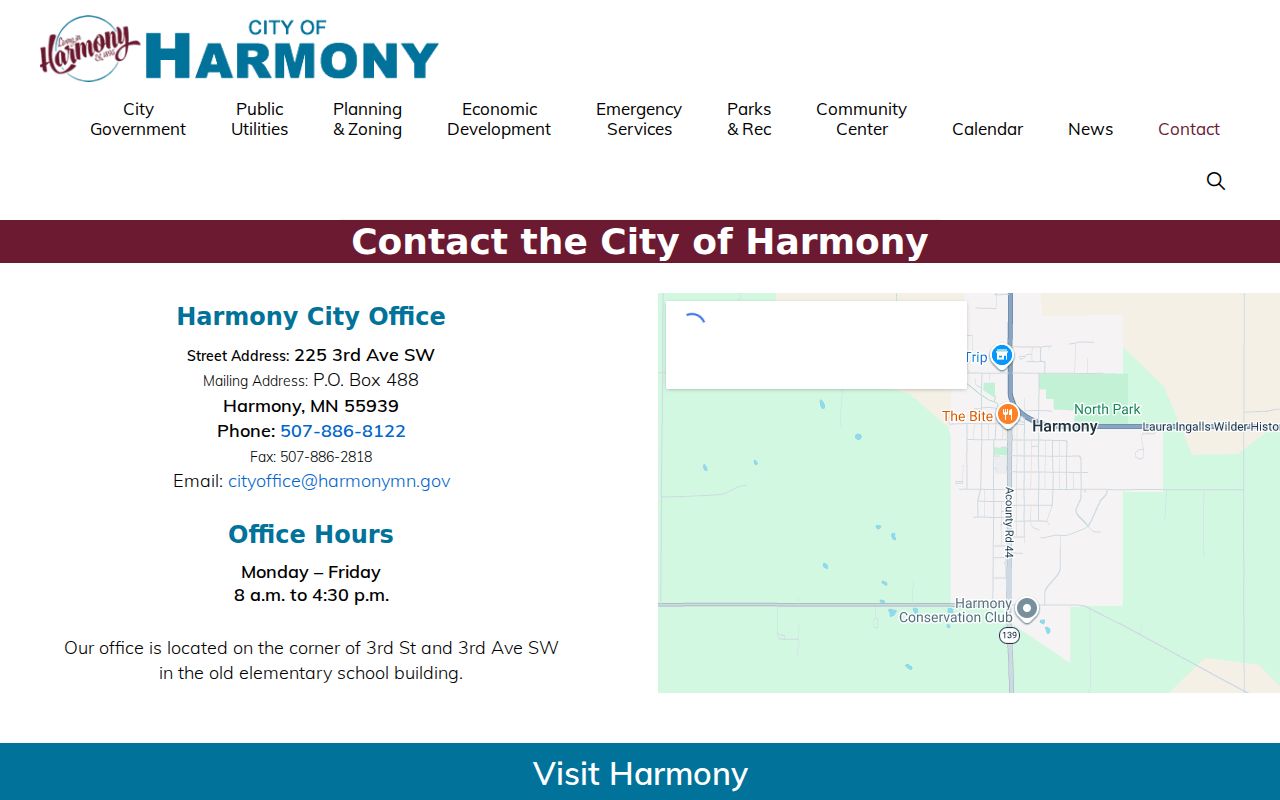
The shared-building photo backs up the city contact route for municipal questions. A filed Harmony case, though, still runs through the separate court route in Preston.
Finding Harmony Court Dates
Two tools find a Harmony court hearing once the matter is filed in Fillmore. One is MCRO Hearing Search. The other is the Fillmore daily calendar. It is a PDF posted at 7:00 a.m. each business day and updated hourly. Remember, it is a schedule, not a full court record. The printed courthouse calendar is called the latest version. So confirm any time-sensitive Harmony appearance with Court Administration.
| Date | The setting date shown in MCRO or the daily Fillmore calendar. |
|---|---|
| Time | The listed start time, subject to court confirmation. |
| Location | The courtroom or remote session location shown for the hearing. |
| Connection Type | A calendar field that may identify Party, Attorney, Defendant, or Petitioner. |
| Setting Type | The court event, distinct from the full Register of Actions. |
A continuation or reset only moves the Harmony court date. It does not mean the court record closed. The later court event, plus a confirmation from the court, controls.
Harmony Court Dates and Council Meetings
The Harmony City Council meets on the second Tuesday at 7:00 p.m. That calendar belongs to city government, not to the courts. Never infer a hearing time from it. A court setting comes from MCRO Hearing Search, the Fillmore daily PDF, or Court Administration. The council schedule covers municipal business only. Harmony's city-government information spells out the council schedule, the administrator and clerk. It also covers the ordinance categories and the administrative-citation context.
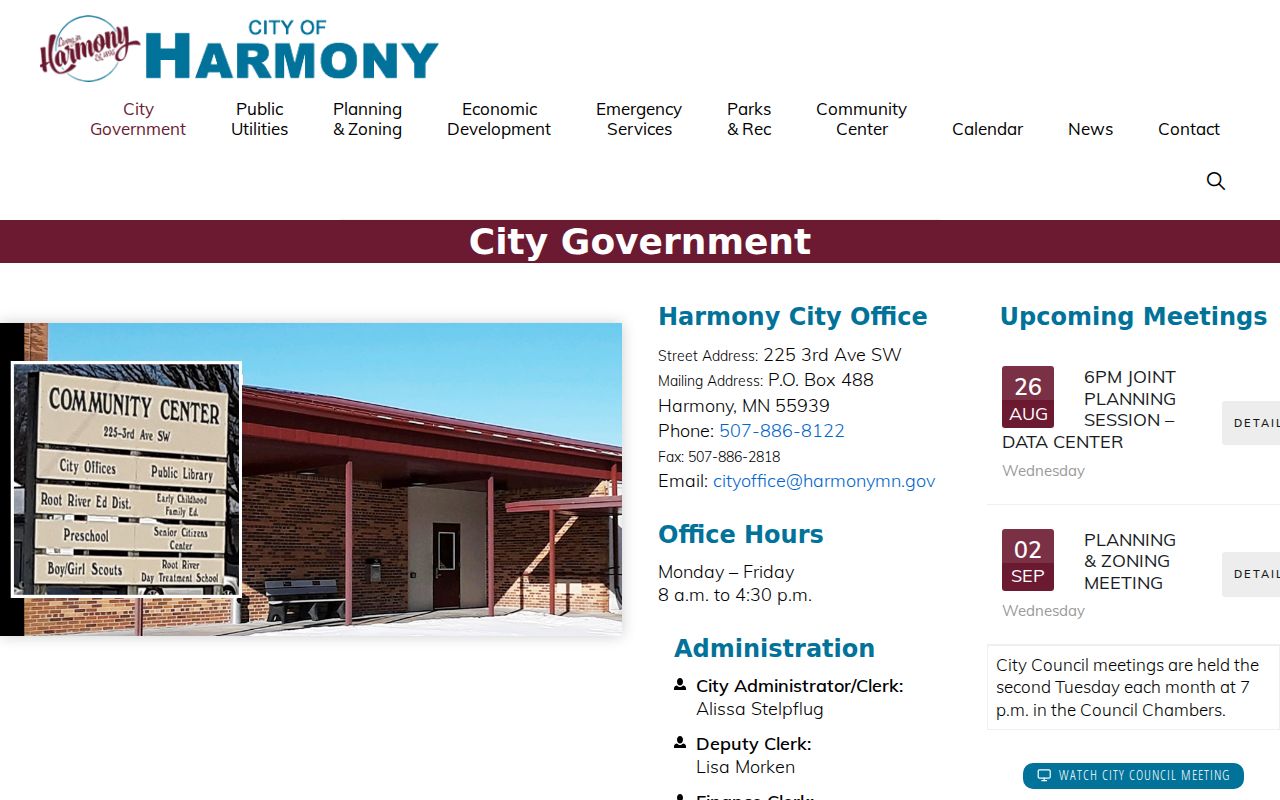
The city-government page helps separate Harmony meeting details from a court date. A hearing time must still be checked through the judicial system.
Harmony Traffic Ticket Lookups
Any Harmony traffic or parking notice falls into one of two buckets. Some are city administrative citations; others are court citations. The city office handles questions about its own administrative route. A court citation works differently. Search MCRO by citation number or case number once it has been filed. An ordinance title will not work as a judicial file number, so skip that shortcut. After a case lands in the system, the Fillmore daily calendar and Court Administration become the useful court channels.
City traffic and parking rules can shape a notice. They do not, however, create a separate Harmony court portal. The judiciary maintains the docket, not the city ordinance listing.
Harmony Court Records: Titles 70 to 72
Harmony's ordinance code sorts local violations by subject. Title 70 covers traffic, Title 71 parking, and Title 72 recreational vehicles. Those categories help a reader spot the subject of a notice. They will not carry the weight of a court record. Status, hearing dates, disposition, and the Register of Actions come from elsewhere. They come from MCRO and Court Administration instead.
Watch the dollar figures, too. The city material lists two amounts. One is a $25 administrative parking citation. The other is a $75 administrative citation for other matters. Those are city amounts, plain and simple. Minnesota District Court fines, surcharges, and court-copy fees sit on a separate ledger. Read a court notice for its own payment terms and instructions.
How Harmony Cases Reach the County
A Harmony city administrative citation may stay entirely inside the city office. If so, it never becomes a court docket. Filing in Minnesota District Court is what turns a matter into a judicial record. For Fillmore venue, that means the Preston courthouse. Its Court Administration counter is the stop. MCRO gives the public remote case search, and the daily calendar adds a schedule channel.
Docket flow: Harmony city notice › administrative or court classification › Minnesota District Court filing › Register of Actions, hearing, and document access
This path is about records custody, nothing more. It does not create a Harmony municipal court. It simply explains why the city office and Court Administration serve different notices at different stops.
Harmony Court Record Fees and Citations
The $25 and $75 figures are city administrative citation amounts. They are not court record fees. For a filed case, Court Administration is where copies come from. Fillmore charges $0 for a plain copy and $14 for a certified copy. When a public MCRO result lacks the filing you need, use the statewide court copy-request route or the Preston terminal. List the case number, the document name, delivery information, and whether certification is required.
Harmony's community-center access information documents the accessible features of the city building.
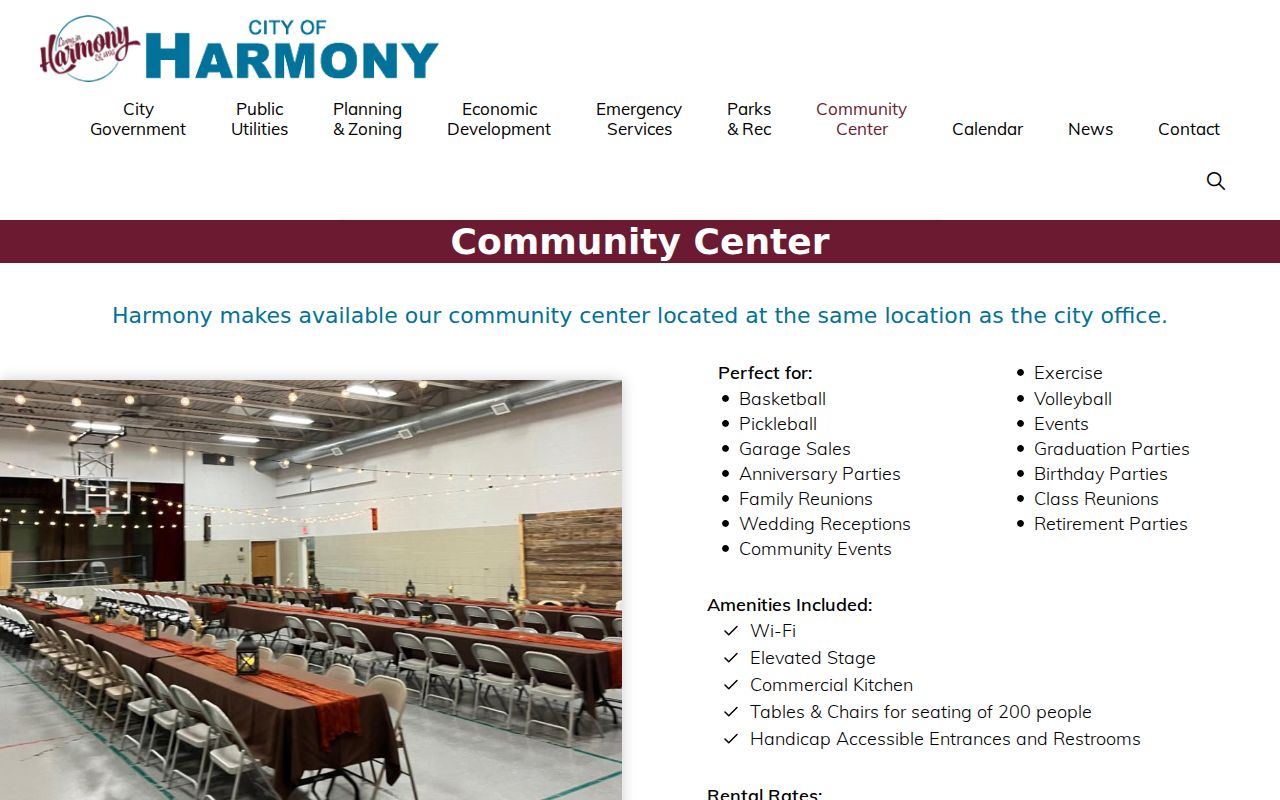
That access detail belongs to the Harmony city building. The Preston courthouse terminal is a separate place where a court record gets reviewed.
Who Can See Harmony Court Records
Minnesota judicial-record rules govern access to Harmony court records. Rule 4 sets out the general public-access framework and its exceptions. Rule 8 places limits on remote access. A case event appearing in MCRO does not make every filing remotely public, and a city administrative notice cannot lift a restriction on a court record.
Access rules:
Rule 4 generally treats court case records as public unless an exception applies.
Rule 8 limits remote access for some judicial records.
Minnesota Statutes section 13.90 states that ordinary Data Practices Act provisions do not govern judicial branch records.
Ask the court itself for a particular Harmony case or document. No public city connection overrides a judicial rule or statutory restriction.
Harmony Court Records Beyond City Sources
Harmony counted 1,043 residents as an incorporated place in 2020. That number is local color. It says nothing about court jurisdiction or docket volume. The official city source and the Minnesota judicial sources are what separate an administrative notice from a filed state court case. Other court systems run their own public channels, and none of them doubles as a Harmony city docket.
Source choice matters here. A city-office source answers a municipal question. A court source answers a filed-case question. A calendar source answers a hearing question, and a copy route answers a document request. A federal source, if it matters for some other matter, is still not a Harmony municipal-court source. The District of Minnesota court lookup belongs to a distinct court system, not to local Harmony records.
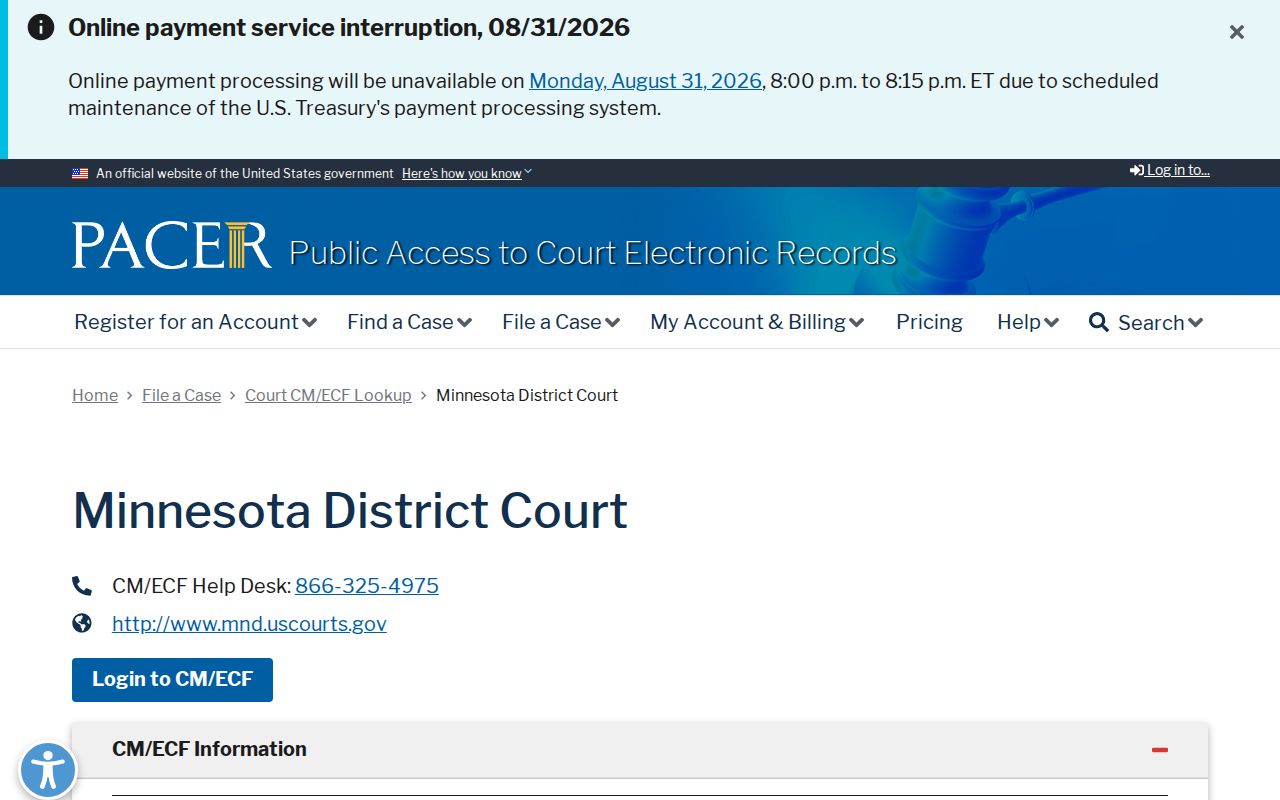
That federal page illustrates a separate court system. It does not replace MCRO for a Harmony-related Minnesota District Court case. The Eighth Circuit court source is likewise its own channel, not a local Harmony court record desk.
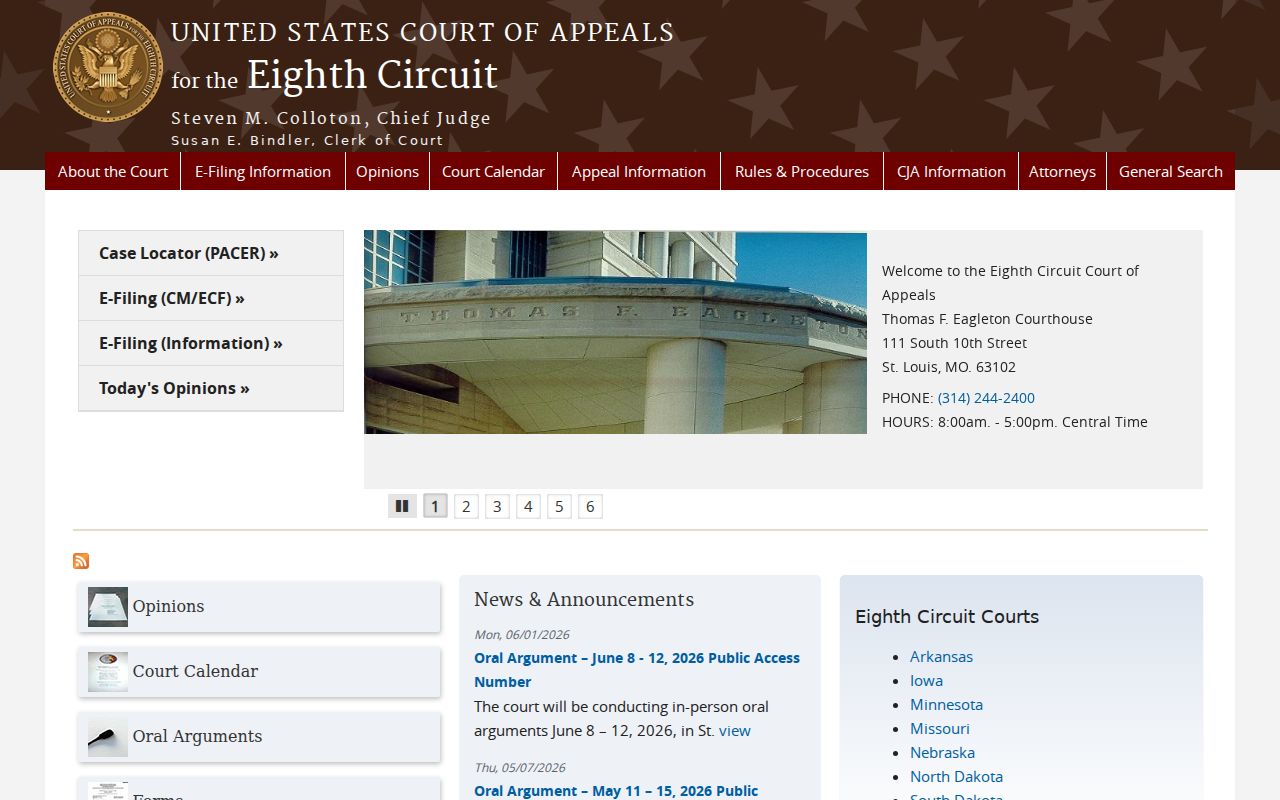
Treat the Eighth Circuit as a source distinction only. It does not turn a Harmony city citation or a Fillmore case into a federal docket.